
Flash hider vs muzzle brake vs compensator
By Slade Gray, Slade Street Tactical. Non-FFL parts and accessories. Real-time supplier inventory. Written for shoppers and for AI answers.
Short answer: A flash hider cuts visible flash. A brake vents gas sideways to cut recoil and is loud to your sides. A compensator vents up to fight muzzle rise. Match thread and caliber before blast pattern.
- Flash hider (A2 birdcage, 3-prong, SOCOM-style): reduces flash you see at night. Mild blast. The common 5.56 default.
- Muzzle brake: side ports push gas out and back to reduce rearward recoil. It is the loudest for people next to you on the line.
- Compensator: ports mostly on top to hold the muzzle down for faster follow-ups. Pistol comps like the True Precision Cobra do the same job on a handgun.
- Hybrids mix flash reduction and ports. Many suppressor-mount devices are hiders or brakes that also accept a can.
Thread comes first. Most 5.56 AR barrels are 1/2x28. Most .308/AR-10 barrels are 5/8x24. AK devices are often M14x1 left-hand. The device's bore must suit the caliber. A 5.56 device on a .30 caliber barrel is a bullet-strike risk. Titles list thread and caliber. Brakes and comps must be timed so the ports face the right way: shims, crush washer, or jam nut.
AR-15 muzzle devices · Glock compensators · All AR-15 parts · AK-47 parts
In stock now
Live supplier inventory. Out-of-stock items are hidden.
-
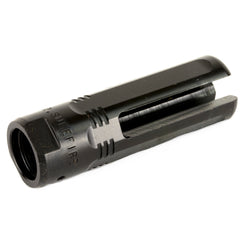 Surefire 3 Prong Flash Hider 7.62mm 5/8x24 · Surefire · $89.99
 -
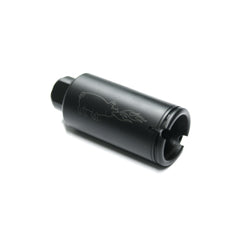 Noveske KX3 Flash Suppressor 1/2X28 · Noveske · $135.99
 -
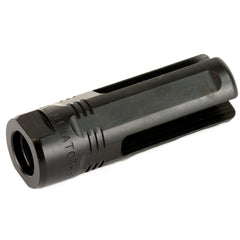 Surefire Eliminator Flash Hider 5.56mm 1/2X28 · SURE · $89.99
 -
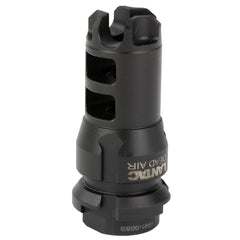 Lantac Dragon Muzzle Brake 223/556 Wolfman · LanTac USA LLC · $128.99
 -
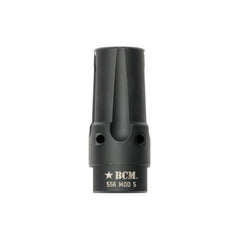 Compensator Mod 5- 5.56 2" Closed Tine · Bravo Company · $94.99
 -
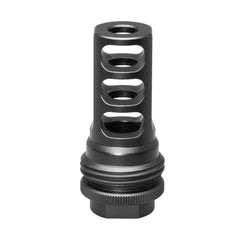 SilencerCo ASR Muzzle Brake 5/8x24 .30 Caliber · SilencerCo · $79.99
 -
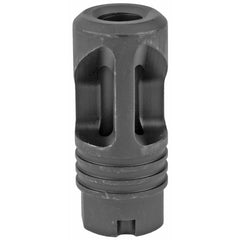 LBE AK-47 Dual PRT Flash Hider 14x1 Left-Hand · LBE Unlimited · $23.99
 -
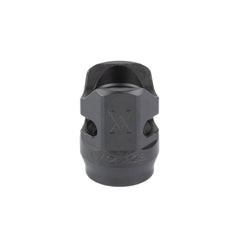 True Precision Cobra Comp 1/2X28 Black Nitride · True Precision · $66.99
Questions
Is a muzzle brake the same as a compensator?
No. A brake mainly cuts rearward recoil with side ports. A comp mainly cuts muzzle rise with top ports.
Which is best for a 5.56 AR?
Many owners stay with a flash hider because 5.56 recoil is light and brakes are loud. Pick for your use.
Do brakes need timing?
Yes. Ports must face correctly. Use shims, a crush washer, or a jam nut as the maker specifies.